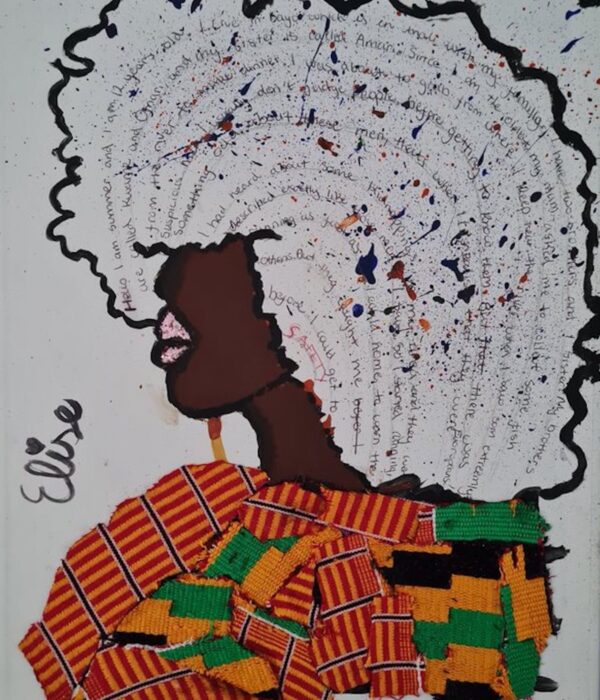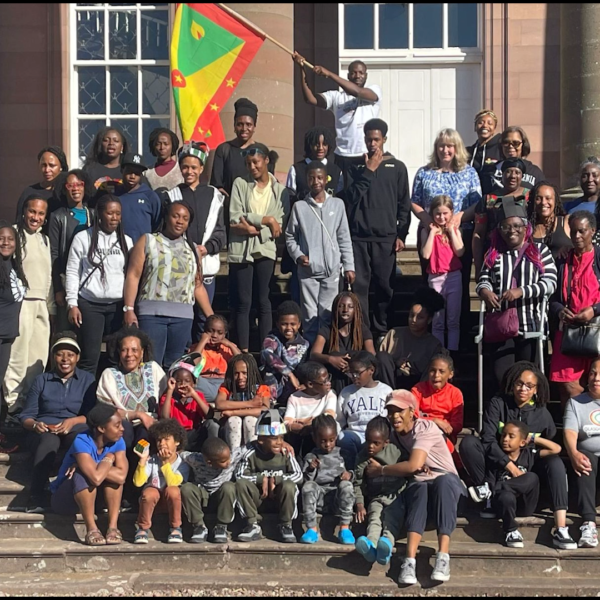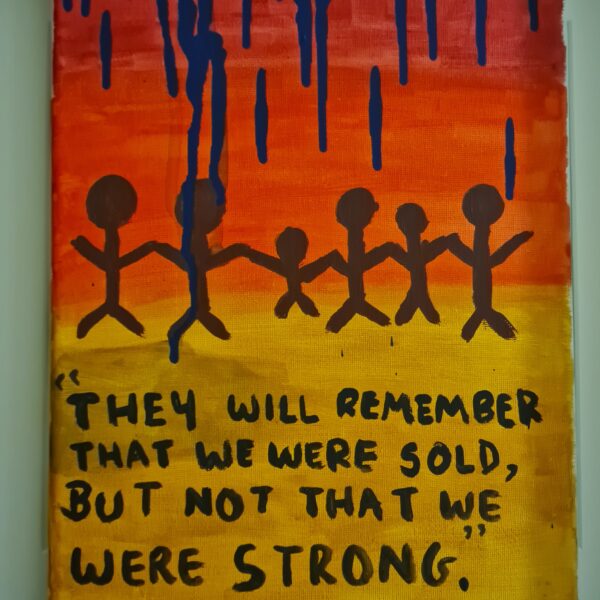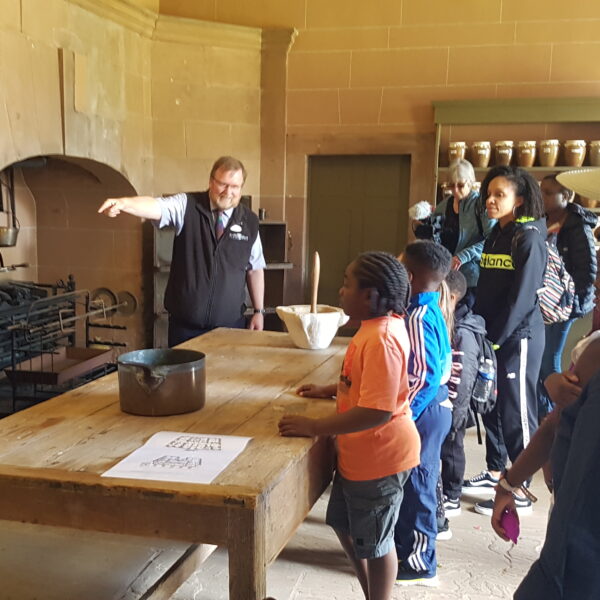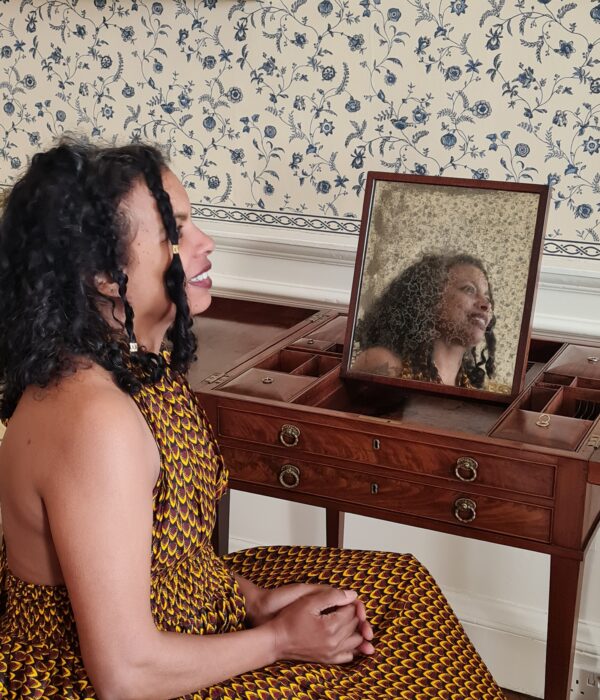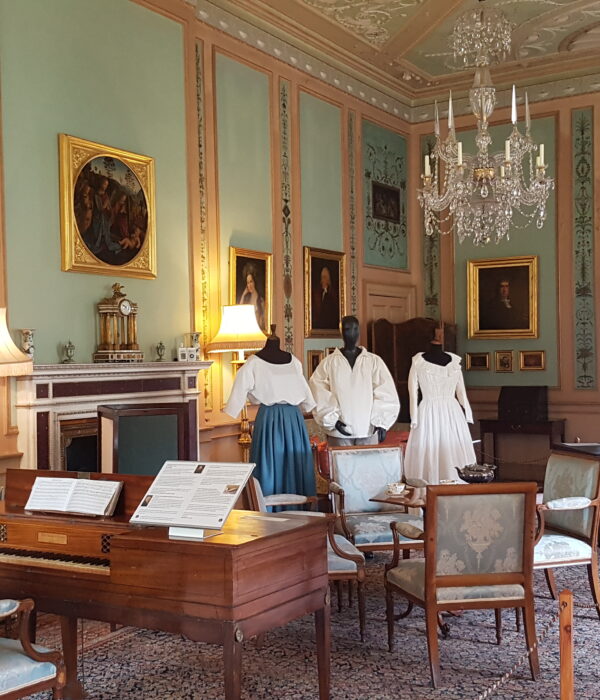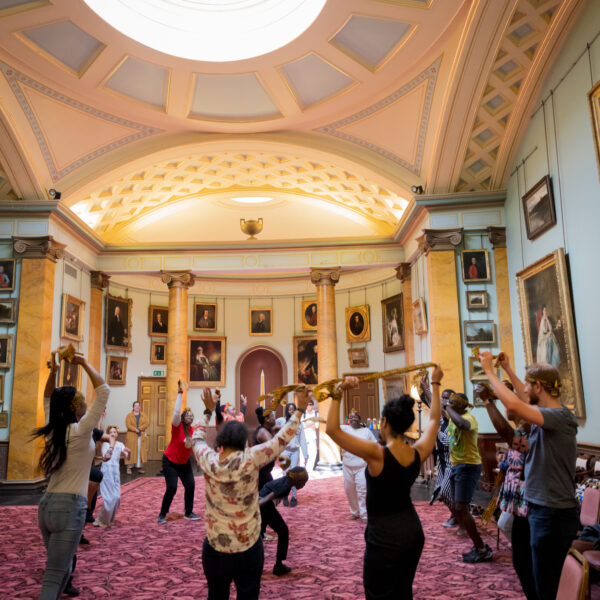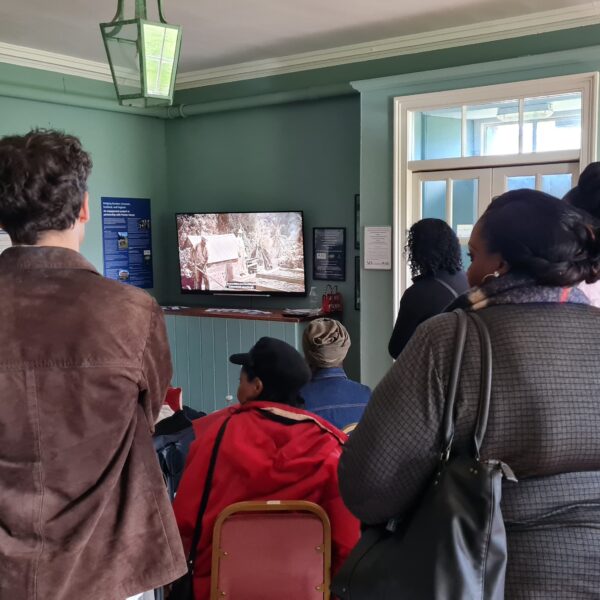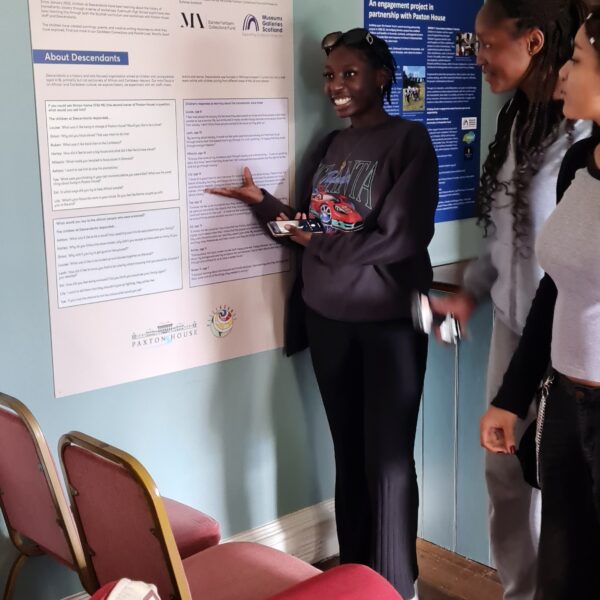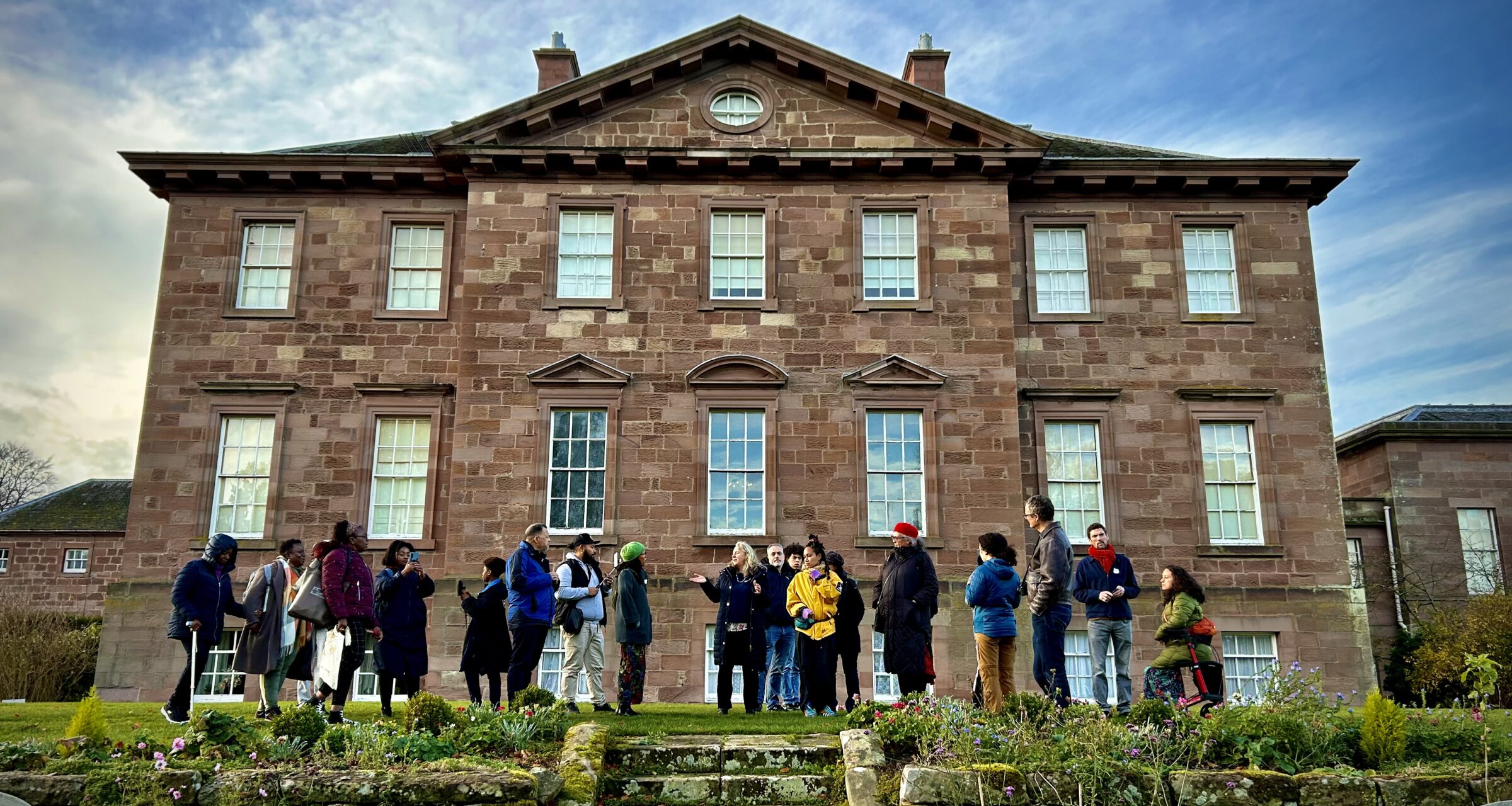
The CCCP, a co-production initiative delivered in partnership between the ‘Bridges’ – the Caribbean Institute for Eco Liberation Inc. (CIEL Caribbean Institute for Eco Liberation – YouTube ), Grenada; Descendants Children’s Charity, England; and the Edinburgh Caribbean Association (ECA Edinburgh Caribbean Association – Edinburgh Caribbean Association), Scotland – artists, and community participants across the UK and the Caribbean (Grenada and Ghana).
The project aimed to:
- Explore connections between Paxton House and its former owners, the Home family, and Grenada from 1764 to present day, and raise awareness of this history.
- Bring new understanding to families that are part of the African Caribbean diaspora.
- To explore rich new research and resources and develop a new understanding of the place that Paxton House holds in the history of the transatlantic slave trade.
- Work together with different groups and communities to create relationships that promote longevity, power sharing, and equity.
- Inspire a sense of pride and accomplishment in the young people and older generations of the communities with which Paxton Houseis cooperating.
- Build on work with partners and communities in new, sustainable, ways to create long term educational resources, new partnerships, and develop the skills of all involved through training, workshops. exhibitions, and events.
Key outcomes include:
- Deepened understanding of Paxton’s links to slavery.
- Centring Caribbean communities and shifting the narrative.
- Strengthening cross-community and cross-country relationships.
- Enhanced creative and cultural outputs.
- Increased sense of belonging and representation at Paxton House.
- Enhanced institutional confidence and capacity for decolonisation.
- Platform for honest cross-cultural dialogue.
- Increased visibility and awareness among wider audiences.
- Meaningful educational impact.
- Lasting legacy through exhibition (Palimpsest and artist’s intervention) and interpretation (each partner developed and delivered a new film incorporated into the Caribbean Connections exhibition)
Overall project outputs
- A film created by pupils from Bonair Government School in Grenada with Waltham community elders. LINK to FILM needed
- A film and creative responses produced by young people from Descendants.LINK TO FILM NEEDED and images to be supplied by FSM
- A stand alone film/creative piece by Leilani& Beau Taneus-Miller, Edinburgh Caribbean Association and creative writing developed ECA members. LINK TO FILM needed
- Two new online learning resources for schools and adults, informed by project research.
- Significant publicity for the project and accompanying exhibition.
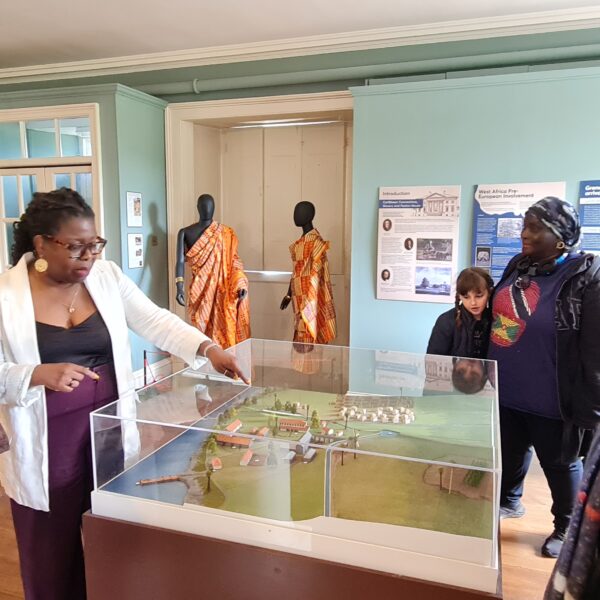
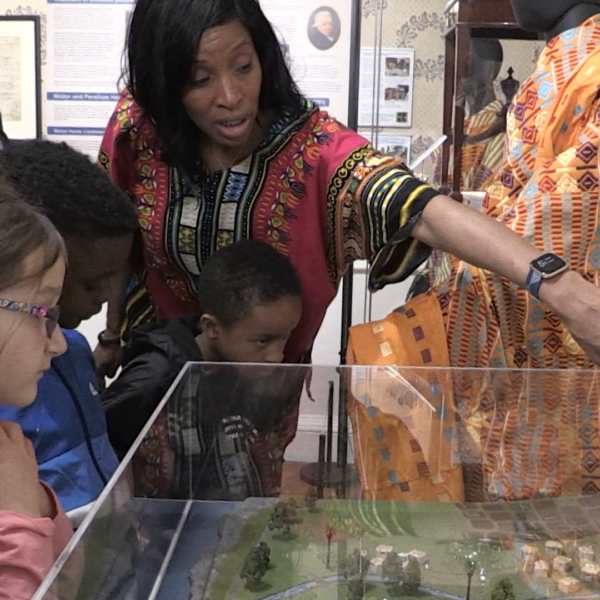
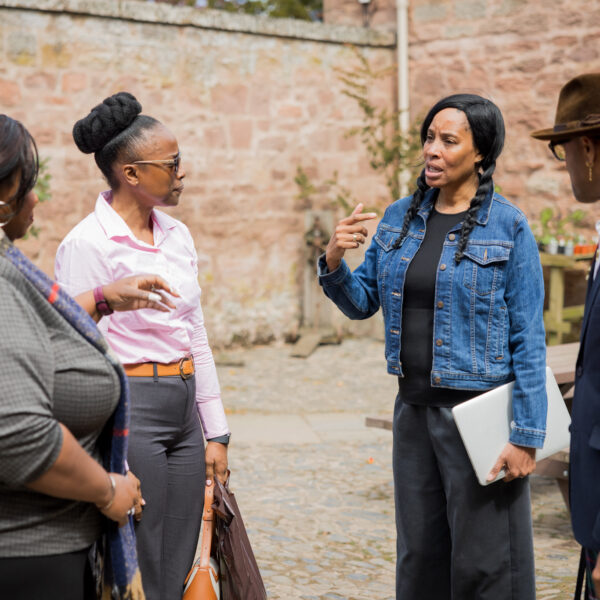
- Participant visits to Paxton House, including workshops and engagement activities.
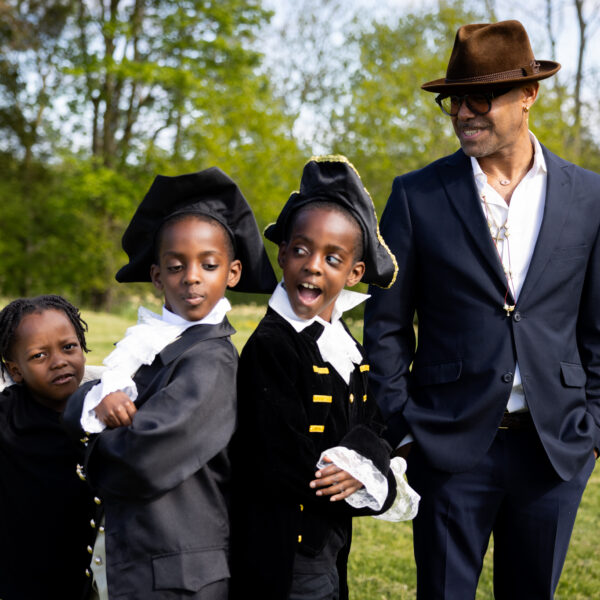
- A Caribbean Connections launch day (3 May 2025) for both the Palimpsest exhibition and the co-production project attended by 109 people. This included: creative Caribbean art, music, and dance workshops for families, tours of the house and exhibitions, artist in conversation event with Billy Gérard Frank, performances by Ladies of Midnight Blue and Descendants children; speeches, including one from the Grenadian High Commissioner (Rachér Croney).
- 20 further Caribbean themed events during the Palimpsest exhibition including tours, online and in person lectures, talks, and a historical cooking demonstration; children’s and schools workshops; and a second ‘Artist in Conversation’ event
- An artist’s residency where Billy Gérard Frank created four new limited-edition multimedia screen prints in collaboration with Glasgow Print Studio and inspired by Paxton’s collections and the trans-Atlantic slavery connections.
- An artist’s intervention where Billy Gérard Frank
Approximately 14,344 visitors attended the Palimpsest and Caribbean Connections exhibitions.
Additional outcomes:
- Re-writing of the Collections Development Policy of Paxton House in 2025 to enable the possibility of acquiring works of art and responses to the wider history of Paxton and the Home family.
- Five new works of art acquired with grant funding from Art Fund and the National Fund for Acquisitions and donations by Billy Gérard Frank now on permanent display.
- Staff and partners skills development.
- Paxton staff trained on anti-racism and anti-ableism.
- Re-written Caribbean Connections exhibition interpretation with new research and a ‘decolonising lens’ as requested by partners with the support of Dr Peggy Brunache, first Director of the Beniba Centre for Slavery Studies, University of Glasgow.
- New information on the project will be shared on Paxton’s website shortly.
- Shortlisted for a new award for engagement.
Future collaborations
- New project emerging with the University of Edinburgh and expanding our connections with partners in Grenada at Waltham and Belmont estates, including heritage interpretation centre in Grenada, workshops, and 3D mapping of Waltham estate (owned by the Home family of Paxton House 1764-1848).
Project Impact upon participants / visitors
- “I want to commend the Trust for acknowledging Paxton House’s role in the history of slavery and for meaningfully involving the communities whose ancestors were directly impacted. You are setting an important example for other stately homes to reflect on their own histories and take steps toward giving back… I truly appreciate what the Trust is doing to recognise the past while fostering cross-cultural understanding and dialogue. It’s a powerful and necessary step forward.” – Collette Noel, Dance teacher, Descendants.
- “Paxton has done the most of any Historic House in Scotland towards decolonising the house and collections and addressing the trans-Atlantic slave trade” – Jennifer Melville, National Trust for Scotland
- “What Paxton has done with the communities living on the land [of the Waltham Estate] – giving them a voice and highlighting the experiences of the Caribbean – is invaluable and important. The conversations around trans-Atlantic slavery need to shift to a Caribbean centre.” – Zoe Smith, Journalist and Director of the Caribbean Institute for Eco Liberation Inc, Grenada
- “This was a unique project. It may have been the first time that the young people [at Bonair Government School] knew this connection and that there is now a school on the plantation. The food, farming, landscape and traditions are still linked to plantocracy and through this project those involved can better appreciate their landscape and traditions. It has given them creative agency in their own history.” – Billy Gérard Frank, Artist
- “I am writing to express my whole-hearted support for Paxton’s acquisition of the artworks by Billy Gérard Frank. The long-standing relationship that the curatorial team have cultivated with Frank is an impressive one, and the acquisition of these artworks is an important step in acknowledging and preserving that relationship. The artwork itself has intimate connections to Paxton’s past and the acquisition of it would help visitors understand these links and connections, as well as demonstrate how Paxton is looking to its future as a living historical space.” – Dr Sally Tuckett (University of Glasgow), Expert curatorial panel member, 01/09/2025
- “I truly feel that the approach Fiona (Curator) championed throughout this collaboration represents best practice in the ethical engagement with contested heritage. Rather than treating histories of enslavement as extractive, symbolic, or institutionally contained, she supported a model rooted in reciprocity, community agency, education, and long-term relationship building.
This included allowing space for voices from descendant communities to shape the narrative, pacing the work according to community and creative realities, and prioritising outcomes that delivered value beyond institutional visibility. Such an approach aligns with the highest standards now being advocated internationally for work on difficult histories, and places Paxton House at the forefront of responsible, future-facing heritage practice. Zoe Smith, CIEL.
- “The trip to Paxton House is etched in our memories. The level of care that went into the whole weekend and the wonderful range of activities [at Paxton] were so enriching… We felt welcome and could really sense that the weekend was ours… and to see our film and also Billy’s film, was so exciting. For me, as mum, Paxton House represented acknowledgement…something that is lacking more generally and there is something really healing about that.” Jo-anna, parent (Descendants)
- “I think it is a great initiative and hope it will be forbearer of future endeavours to demonstrate Caribbean heritage and the impact on slave trade on grand estates such as Paxton.” (Visitor to Paxton House, 2025)
- “Incredible artwork. Informative and sympathetic presentation re slavery & the proceeds of slavery used as the bedrock of funding for great country houses in the UK, with pertinent & interesting references to Paxton in particular.” (Visitor to Paxton House, 2025)
Supporters
- The projects involved many volunteers and volunteer hours (including Paxton staff) in addition to the fundraising by Paxton’s curator from multiple sources to make our vision feasible.
- We wouldn’t have been able to deliver these projects without the in-kind contributions as well as the support of our funders:
- Esmée Fairbairn Collections Fund (Parallel Lives, Worlds Apart)
- Museums Galleries Scotland, The Textile Society, Hugh Fraser Foundation, Destination Tweed, The Henfrey Charitable Trust, a private charitable trust, and donations.
- Co-production requires time, flexibility and realistic resourcing. Sensitive histories require trauma-informed practice and carefully managed dynamics.
Future
New academic and comparative pathways.
- Through Paxton’s curator’s introductions to scholars at the University of Edinburgh, it now appears likely that further comparative research will emerge, examining the histories of Waltham Estate in St Mark and Belmont Estate in St Andrew, Grenada. This represents a significant deepening of the work and demonstrates how thoughtful curatorial leadership can open long-term avenues for ethical, transnational historical engagement. (Zoe Smith, CEIL), 2026).
- Engagement via talks, presentation, working with students at school and university including those at PhD level, and exploring the possibilities of future academic research with both the Universities of Edinburgh and Glasgow.
- Continuing partnership working.
- Continuing the programme of transcribing and researching the Home family archives and beyond to bring greater access and understanding to Paxton’s connections to the transatlantic slave trade and its impact.