A Georgian “Instagram” Moment
When Paxton House was built in the 1750s, fashionable landscape gardens were all the rage. Inspired by the great 18th-century designer Lancelot ‘Capability’ Brown, Scottish landscaper Robert Robinson created sweeping and romantic views.
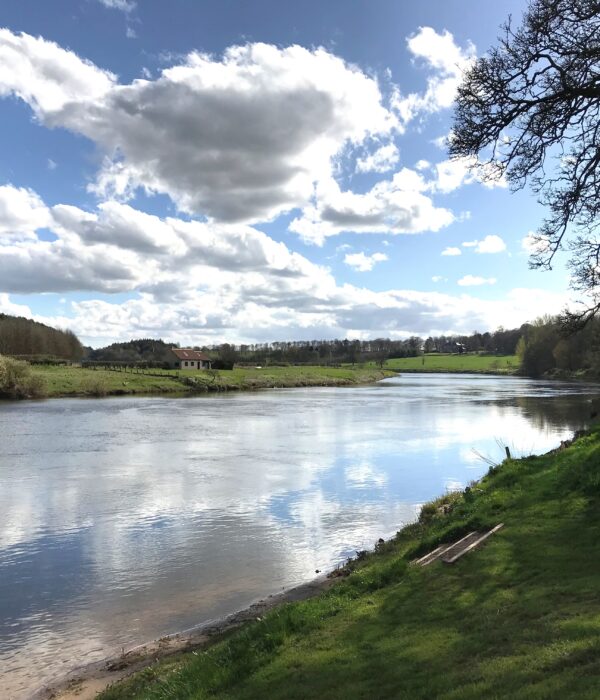
Think rolling lawns, winding paths, dramatic ravines and perfectly framed views of the River Tweed, the Chain Bridge and beyond to the Cheviot Hills.
In Georgian times, this was the height of style, perhaps the 18th-century equivalent of finding
the perfect filter.
Walk the woodland paths and you’ll discover for yourself; trees that hide and reveal the river, glimpses of distant hills, and that delicious sense of discovering something just around the bend. Gardens evolve and change and Paxton’s tells that story beautifully. In the 19th century, adventurous plant hunters brought dazzling new species back from the Himalayas.
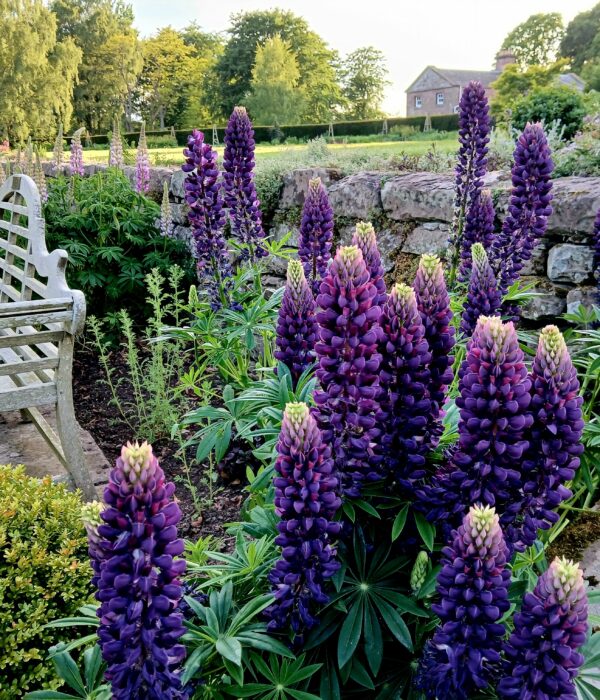
Rhododendrons and azaleas flourished in Paxton’s woodland gardens, and today they still burst into colour each spring. Later came elegant sweeping herbaceous borders and a charming circular lily pond. Further down into the woodlands, discover the Well Garden – this offers ornamental shrubs, ferns and seasonal surprises.
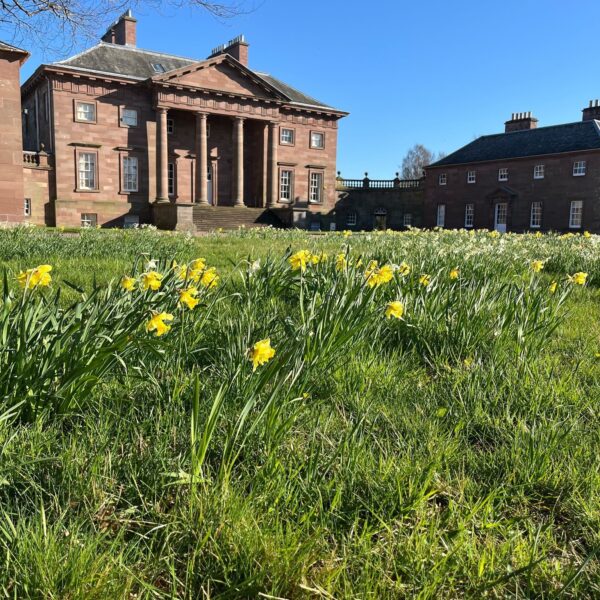
And then there are the daffodils. Thousands of them. Brightening the lawns and framing the house with their arrival heralding spring. Many families return year after year just to see them bloom.
The Appleyard & The Edinburgh Window
Hidden within a sunny 18th-century brick wall is the Appleyard. A proper sun trap bursting with heritage apples, plums and medicinal herbal planting.
At its heart stands the striking Edinburgh Window, rescued from a grand Princes Street building and rebuilt here as a romantic garden centrepiece. With its carved cherubs and elegant stonework, it’s part history lesson, part selfie spot.
Perfect for photos. Even better for picnics.