
Ninian Home commissioned Chippendale, Haig and Co. to decorate and furnish his home ‘in a neat but not expensive manner’ between 1774- 1791.
The firm furnished the house with a wide variety of exquisitely made chairs, cabinets, desks, beds, clothes presses, tables as well as soft furnishings. This included a complete interior design scheme for the Dining and Drawing rooms. supplying hand-painted wallpaper and enormous pier glass mirrors from Paris.

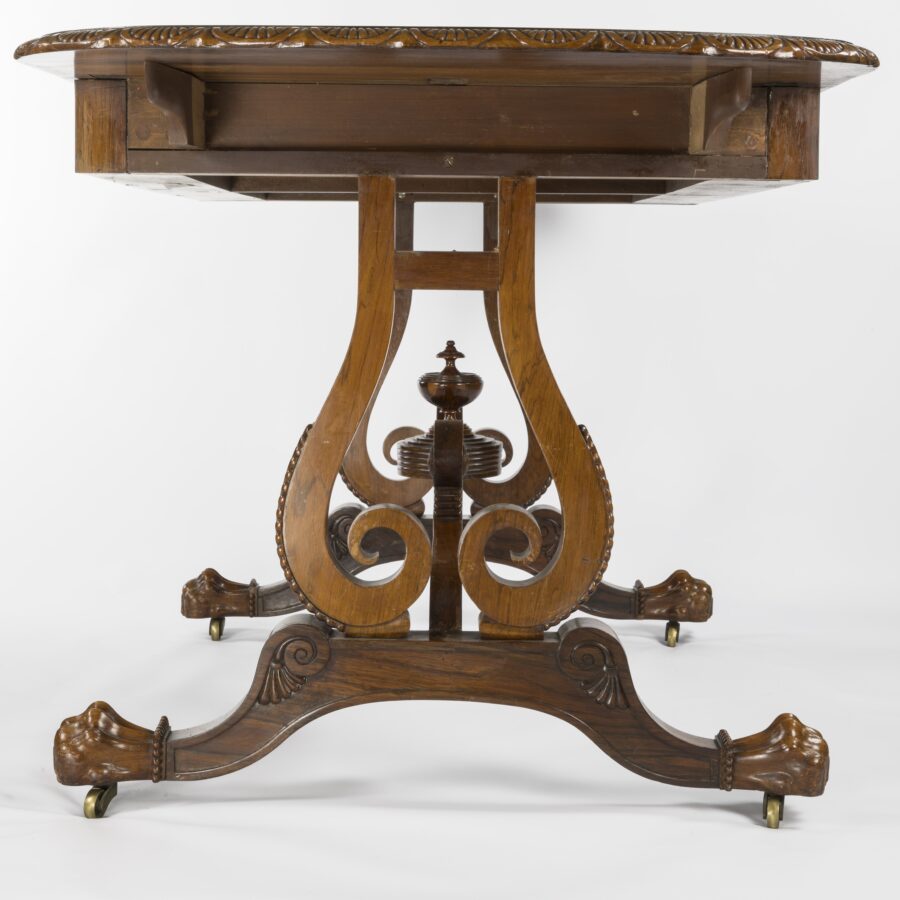
William Trotter is Scotland’s most outstanding cabinetmaker of all time. A crucial figure in the Edinburgh New Town, he had showrooms on Princes Street. Paxton House was Trotter’s largest country house commission with 40 fully documented pieces made for the new wing added by George Home in 1812-15. This is the world’s largest publicly accessible collection of Trotter furniture.






Patrick Home, who commissioned Paxton House, was sent abroad in 1748, shortly before the second Jacobite uprising. At just 20 years old, his mother wanted to broaden his education. After university in Leipzig, he headed for Berlin and later for Italy and France. This fashionable adventure for young men was known as the Grand Tour, a bit like a modern gap year. Patrick traveled in Europe again in the 1770s.
While travelling Patrick acquired a large number of paintings, marbles, and souvenirs including an outstanding 16th century ebony and bone cabinet made in Naples for the Albertoni family. Several old master paintings and landscapes in the house were also collected in Europe including Rosalba Carriera’s portrait of Frederick the Great. These were shipped back to Britain and mostly remained in storage until being unpacked after his death.

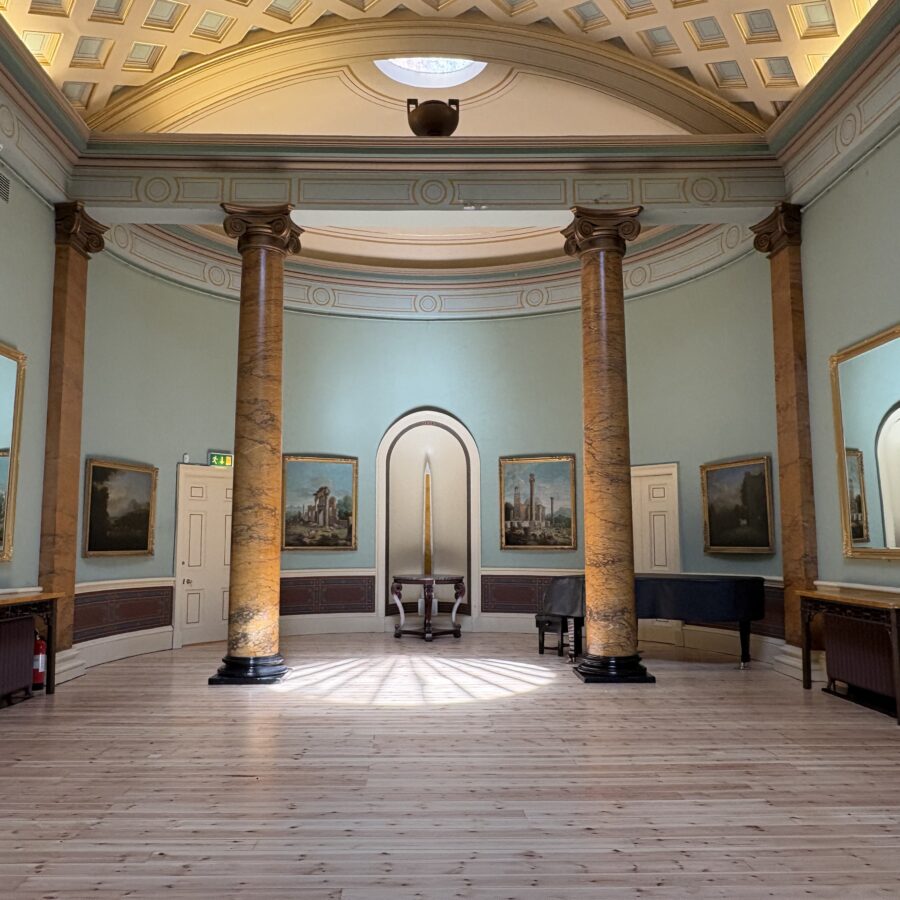
Newly updated, Scotland’s largest private gallery ever built, and indeed the most ambitious in any Scottish country house, is now a magnificent Ballroom for entertaining, music, and events.
Showcasing some of the finest works of art collected during 18th century Grand Tours in Italy and more recently in Scotland by the Home family, the Ballroom is completed with exceptional William Trotter furniture designed for this space with Italian marble tops.
Landscapes represented include the World Heritage site of ancient Palmyra (Syria), sublime views of Naples and Vesuvius by Francesco Fidanza, and the world’s oldest chain suspension bridge, the Union Chain Bridge by Scottish artist, Alexander Nasmyth.
Newly installed mirrors reflect glimpses of the paintings and events taking place.
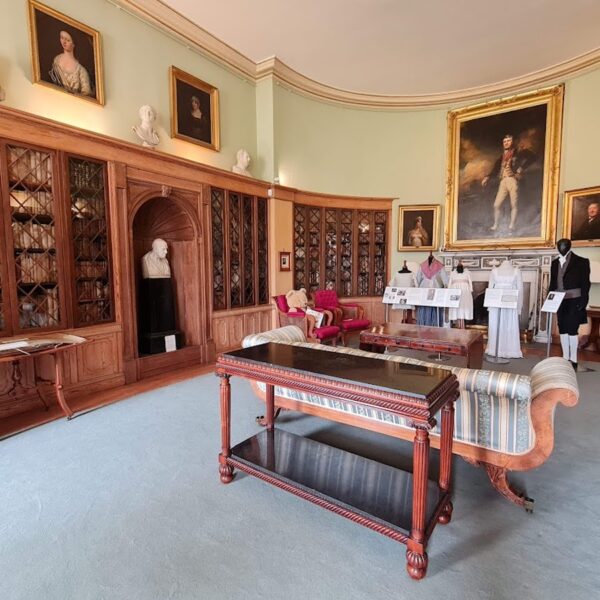
Paxton House is home to a world class collection of nearly 400 items of historic costume. The core of the collection is 18th century men’s costume, much of it found locked in a trunk 240 years after Patrick Home returned from abroad. These clothes were worn when he was a favourite of the court of Frederick the Great of Prussia between 1749-1751.
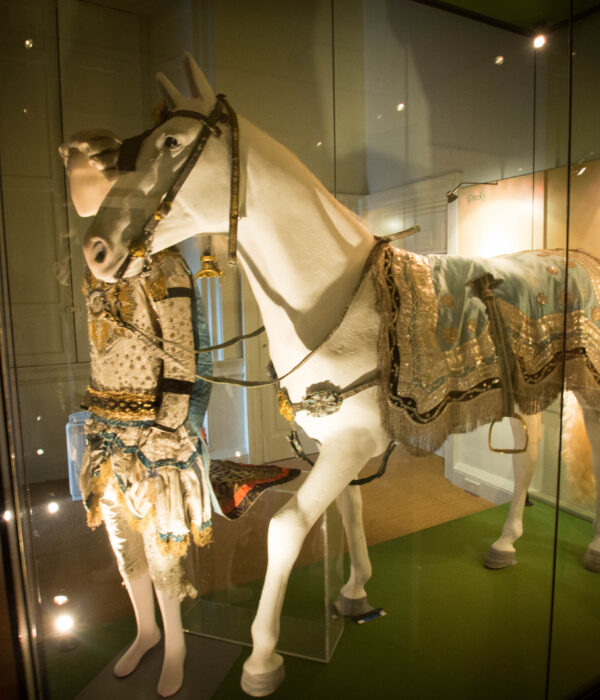
In these stunning outfits he courted his great love, Sophie de Brandt and took part in daily life at the King’s palaces. Of international importance is the exquisitely detailed fancy dress costume, embroidered with gold and silver thread, that Patrick wore for the 1750 Berlin Court Carousel, including the regalia for his horse. This is the only surviving costume from the cast of 4000 in a huge four-day spectacle, staged to welcome Frederick the Great’s sister. Other highlights of the collection include 19th century military uniforms, early 20th century ladies’ evening dress and an Elizabethan nightcap. For conservation reasons, not all costume items are on display at one time.